
Antalya Kaleiçi Beginner's Guide: Everything You Need to Know
Antalya's Kaleiçi — literally "inside the castle" in Turkish — is a living open-air museum where Roman city walls, Byzantine churches, Ottoman timber mansions, and a natural harbour all exist within a single walkable neighbourhood. First-time visitors often arrive unsure of where to start, which landmarks to prioritise, or how to find accommodation that genuinely places them inside the historic fabric. This guide answers all of those questions directly: what Kaleiçi is, what you'll find there, how to get around, and how to choose the right place to stay so you can experience it properly.
What Is Kaleiçi? A Clear Definition
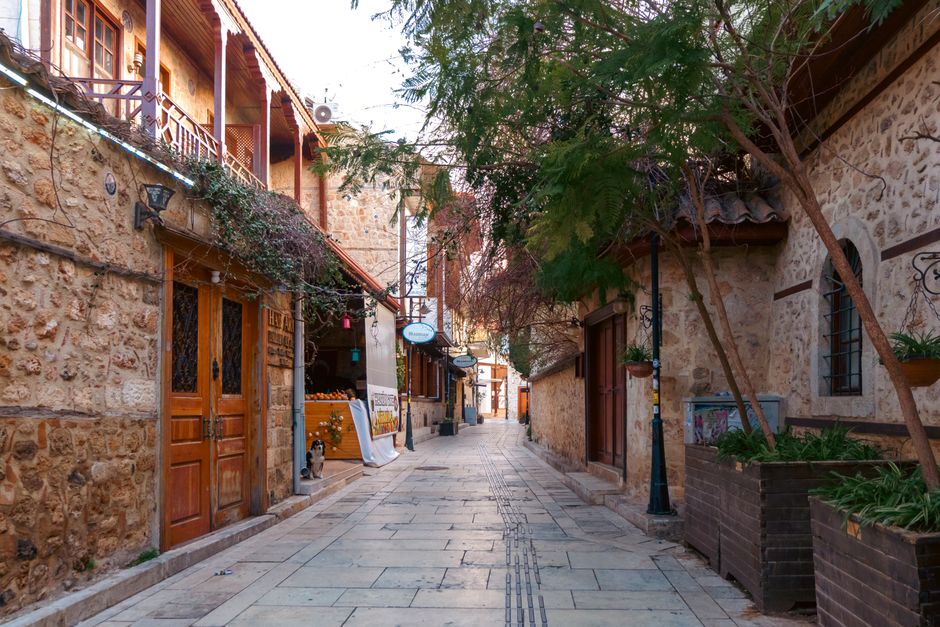
Kaleiçi is the historic walled old town of Antalya, located on Turkey's southwestern Mediterranean coast. The district sits on a rocky promontory above an ancient harbour and is enclosed by Roman-era fortification walls dating back roughly 2,000 years. Inside those walls you'll find a dense network of narrow cobblestone lanes, restored Ottoman-era houses, archaeological sites, mosques, restaurants, and boutique hotels — all compressed into a compact area that can be crossed on foot in under twenty minutes. According to UNESCO's Tentative Heritage List, Antalya's historic centre is recognised for its outstanding universal value as a layered archaeological and architectural landscape.
A Brief History of Kaleiçi: 2,000 Years in Five Minutes
Understanding Kaleiçi's history makes every alleyway and crumbling wall feel more meaningful. The district has been continuously inhabited for roughly two millennia, shaped by successive civilisations that each left visible traces.
- Roman Period (2nd century BC – 4th century AD): The city was founded by the Attalid king Attalus II around 150 BC and later absorbed into the Roman Empire. The harbour was expanded, and the monumental Hadrian's Gate was built in 130 AD to celebrate Emperor Hadrian's visit.
- Byzantine Period (4th – 13th century AD): Antalya served as an important port city. The Kesik Minare (Broken Minaret) mosque was originally a Roman temple converted into a Byzantine church during this era.
- Seljuk Period (13th century): The Seljuk Turks captured the city in 1207. The Yivli Minare (Fluted Minaret), now the symbol of Antalya, was constructed during this period.
- Ottoman Period (16th – early 20th century): The characteristic timber-framed Ottoman mansions that line today's lanes were built during this long era. Many have since been converted into boutique hotels and guesthouses.
- Modern Era: Following careful restoration projects in the late 20th century, Kaleiçi was preserved as a heritage zone and has become one of Turkey's most visited historic districts.
The Key Landmarks Every First-Time Visitor Should See
Kaleiçi's sights are all within comfortable walking distance of one another, making it easy to cover the highlights in a single day — or to savour them over several mornings if you're staying inside the district.
Hadrian's Gate (Hadrianus Kapısı)
Hadrian's Gate is a three-arched triumphal gate built in 130 AD to mark Emperor Hadrian's visit to the city, and it remains one of the best-preserved Roman gateways in the world. The gate stands at the eastern edge of Kaleiçi and is the most photogenic single monument in Antalya. Guests staying at Saye Konak Hotel can walk to Hadrian's Gate in just 3 minutes on foot.
Yivli Minare (Fluted Minaret)
The Yivli Minare is a 13th-century Seljuk minaret built by Sultan Alaeddin Keykubad I, recognisable by its distinctive fluted brick shaft and turquoise tile decoration. It stands at the main square at the top of Kaleiçi and is visible from most of the district. The adjacent mosque complex includes a medrese (theological school) and a türbe (mausoleum).
The Roman Harbour (Kaleiçi Marina)
The ancient harbour at the base of the old city was carved into a naturally sheltered bay by the Romans and remains active today as a small marina for wooden gulet boats and tour yachts. Walking down the steep lanes to the harbour at sunset is one of the defining Antalya experiences.
Kesik Minare (Broken Minaret)
Kesik Minare is a ruined structure that has functioned as a Roman temple, a Byzantine church, a mosque, and a church again over its 1,800-year history — making it one of the most layered single buildings in Turkey. Its truncated minaret gives it a haunting silhouette against the sky.
Antalya Archaeological Museum
While technically just outside the old walls, the Antalya Archaeological Museum (a 10-minute walk or short tram ride from Kaleiçi) houses one of Turkey's finest collections of classical sculpture, sarcophagi, and artefacts excavated from sites across the region. Allow at least two hours.
How to Get Around Kaleiçi: Transport Basics
Kaleiçi is a pedestrian-only zone at its core — private vehicles cannot enter most of the district. This is a feature, not a flaw: the absence of traffic is what preserves its atmosphere. Here is what you need to know about getting around.
| Transport Option | Best For | Notes |
|---|---|---|
| Walking | Everything inside Kaleiçi | The only way to explore the historic lanes. Wear flat, comfortable shoes — cobblestones can be slippery. |
| Nostalgic Tram | Reaching Konyaaltı Beach | A charming heritage tram runs from Müze stop (near Hadrian's Gate) to Konyaaltı Beach in approximately 20 minutes with panoramic city views. |
| Taxi / Ride-share | Airport transfers, distant sights | Taxis drop you at the edge of Kaleiçi; short walk into the district required. |
| Antalya City Bus | Reaching the Archaeological Museum, Lara, city centre | Affordable; stops at the perimeter of the old town. |
Beaches Near Kaleiçi: What Are Your Options?
Kaleiçi does not have a beach inside its walls, but two excellent beaches are extremely close — a key advantage of staying in the historic district.
Mermerli Beach
Mermerli Beach is a small, intimate pebble beach tucked directly below the old city walls, accessible via a short staircase from the harbour area. Guests at Saye Konak Hotel reach Mermerli Beach on foot in just 5 minutes. The beach has a café and sunbeds, and the water clarity here is exceptional.
Konyaaltı Beach
Konyaaltı Beach is a long public shingle-and-sand beach stretching westward from the city, backed by the Taurus Mountains — one of the most dramatic beach backdrops in the Mediterranean. From Saye Konak Hotel, you can reach Konyaaltı Beach in approximately 20 minutes via the nostalgic tram. The tram itself is a worthwhile ride for the views alone.
Where to Stay in Kaleiçi: Choosing the Right Accommodation
Staying inside Kaleiçi rather than in a large resort hotel on the outskirts of Antalya fundamentally changes the quality of your visit. Boutique hotels and konaks (historic Ottoman guesthouses) within the walled district allow you to step directly into the historic atmosphere morning and evening, without commuting.
When evaluating accommodation in Kaleiçi, consider these key factors:
- Proximity to landmarks: The closer your hotel is to Hadrian's Gate, the harbour, and the main lanes, the less walking you'll do with luggage.
- Number of rooms: Smaller properties (under 10 rooms) offer a more personal, quieter experience than larger hotels.
- Room type: Historic konaks often offer varied room types — from standard doubles to family suites and garden villas. See the full room selection at Saye Konak for an example of the range available in a restored Kaleiçi property.
- Payment flexibility: Look for properties that accept credit card, bank transfer, and EFT — this is increasingly standard among reputable Kaleiçi hotels.
Saye Konak Hotel is a 6-room boutique property in the heart of Kaleiçi that exemplifies this approach: restored Ottoman architecture, a location 3 minutes from Hadrian's Gate, 5 minutes from Mermerli Beach, and a range of room types including the Deluxe Suite with freestanding bathtub and a garden villa with two bedrooms.
What to Eat in Kaleiçi: A Quick Food Guide
Kaleiçi's restaurant scene ranges from tourist-facing seafood terraces on the harbour to small family-run lokanta (traditional Turkish diners) tucked into side streets. For an authentic experience, walk one or two lanes away from the main tourist drag — prices drop and quality often rises.
- Köfte and pide: Traditional Turkish comfort food available at virtually every lokanta. Look for wood-fired pide ovens as a quality signal.
- Seafood: The harbour-front restaurants serve fresh fish daily. Grilled sea bass (levrek) and sea bream (çipura) are reliable choices.
- Breakfast (kahvaltı): Turkish breakfast — a spread of cheeses, olives, tomato, cucumber, eggs, and fresh bread — is a cultural experience in itself. Many Kaleiçi hotels serve it in courtyard gardens.
- Pomegranate juice: Fresh-squeezed pomegranate juice sold by street vendors is a Kaleiçi signature. A large glass costs around 30–40 TL.
Practical Tips Before You Arrive in Kaleiçi
A few practical realities will save you confusion on arrival:
- Cobblestones are everywhere: Avoid suitcases with small wheels; a backpack or soft-sided luggage is far easier to manage on the narrow stone lanes.
- The district is hilly: Kaleiçi slopes steeply down toward the harbour. The uphill walk back can be tiring in summer heat — plan accordingly and carry water.
- Best visiting months: April–May and September–October offer the most comfortable temperatures (20–28°C) and smaller crowds. July–August is peak season: hot (35°C+), busy, and more expensive.
- Dress modestly for mosques: If you plan to enter the Yivli Minare mosque or other active places of worship, bring a shawl to cover shoulders and knees.
- Currency: Turkish Lira (TRY) is accepted everywhere; major credit cards are accepted at most hotels and restaurants.
- Language: English is widely spoken at hotels and tourist-facing businesses inside Kaleiçi.
Plan Your Stay at Saye Konak Hotel in Kaleiçi
If you're ready to book accommodation inside the historic district, exploring the room options at Saye Konak is a natural next step. The property's central location in Kaleiçi — 3 minutes from Hadrian's Gate, 5 minutes from Mermerli Beach, and connected to Konyaaltı Beach via the nostalgic tram — makes it an ideal base for first-time visitors who want to experience the district properly. For questions about availability or specific room configurations, the Saye Konak contact page provides direct booking assistance.
Frequently Asked Questions About Kaleiçi, Antalya
What does "Kaleiçi" mean?
Kaleiçi is a Turkish word meaning "inside the castle" or "within the fortress walls." It refers specifically to Antalya's historic walled old town, which is enclosed by Roman-era fortification walls built roughly 2,000 years ago. The name distinguishes the ancient urban core from the modern city that has grown around it.
How many days do you need in Kaleiçi?
Two to three days is ideal for a first visit to Kaleiçi. One full day is enough to see the main landmarks (Hadrian's Gate, Yivli Minare, the harbour, Kesik Minare), while additional days allow for beach time, the Archaeological Museum, and a relaxed exploration of the quieter lanes and local restaurants.
Is Kaleiçi safe for tourists?
Kaleiçi is considered one of Turkey's safest tourist districts. The area is well-patrolled, well-lit, and heavily visited, which naturally deters petty crime. Standard travel precautions apply — keep valuables secure in crowded areas, particularly around the harbour and market stalls.
Can you walk everywhere in Kaleiçi?
Yes — the entire historic district of Kaleiçi is walkable, and most of it is pedestrian-only. The core sights can be covered comfortably on foot in a single day. The main exception is reaching Konyaaltı Beach, which is a 20-minute tram ride from the edge of the old town.
What is the best time of year to visit Kaleiçi?
The best time to visit Kaleiçi is spring (April–May) or early autumn (September–October), when temperatures are comfortable (20–28°C), crowds are manageable, and hotel rates are lower than peak summer. July and August are the hottest and most crowded months, though the Mediterranean sea is at its warmest for swimming.
Are there beaches within walking distance of Kaleiçi?
Mermerli Beach is the closest beach to Kaleiçi, reachable on foot in approximately 5 minutes from the harbour area. Konyaaltı Beach, a longer public beach with mountain backdrop views, can be reached in about 20 minutes via the historic tram from the edge of the old town.